The BOT and Financial Fraud Prevention

The BOT places great importance on managing and preventing financial fraud in order to protect the public from scams and fraudulent schemes. In the past, a variety of guidelines and measures have been implemented, such as regulating mule accounts and issuing standards for prevention, detection, and response. These efforts ensure that financial institutions comply with regulations and help equip citizens with resilience to face the continuously evolving forms of financial threats.

March B.E. 2566 (2023)

Establishing a Framework for Fraud Management

Establishing a Framework for Fraud Management

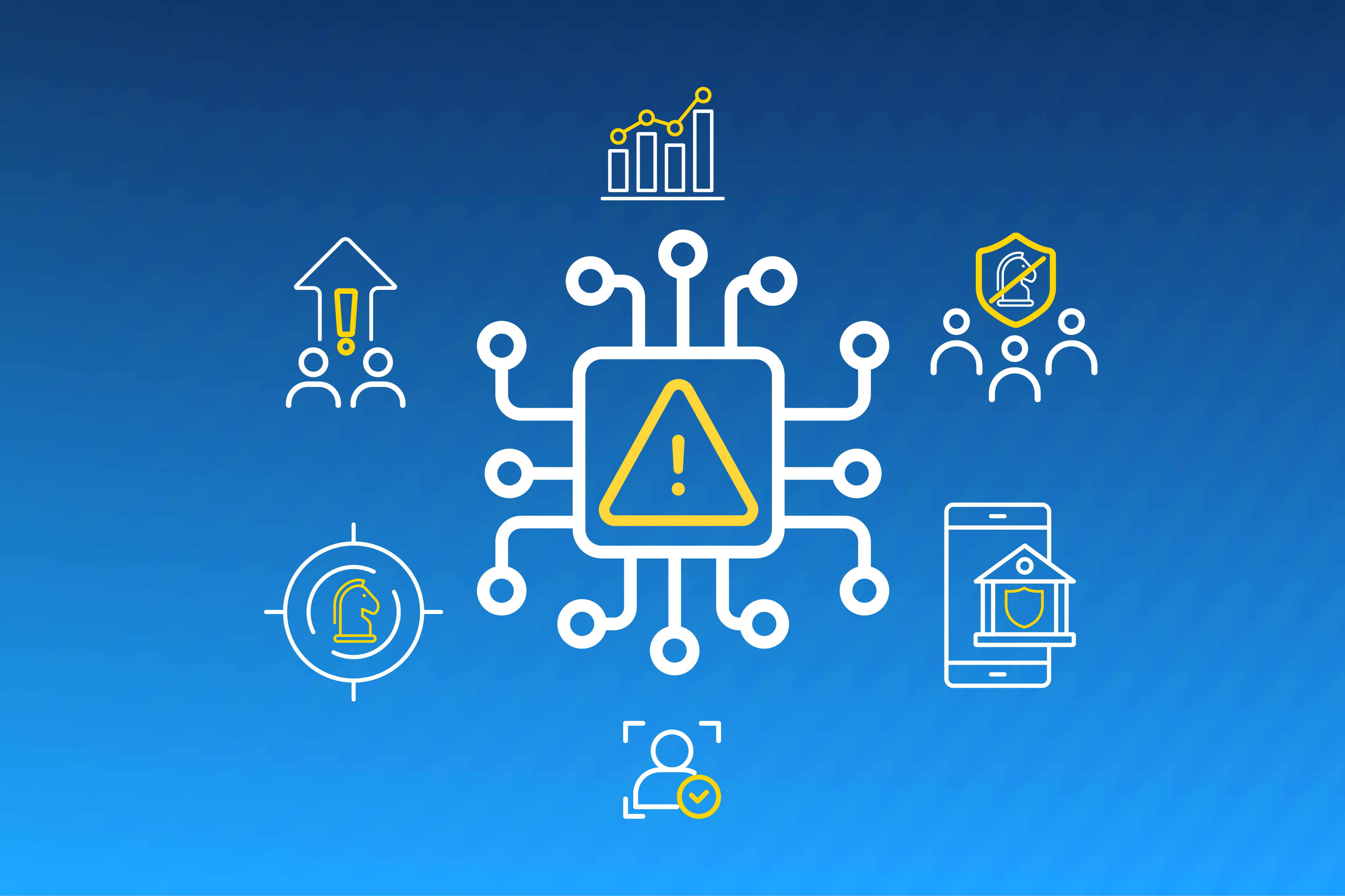
The BOT announced policies for managing fraud risks in financial transactions, establishing a minimum standard for financial service providers. These policies encompass prevention, detection, and response measures, including:

•  Enhancing the security of mobile applications

•  Prohibiting messages with attached links, which could be used for scams

•  Restricting each bank's mobile banking account to use on only one device

•  Implementing facial recognition for identity verification

The BOT promoted the Central Fraud Registry (CFR) system to support information sharing about money trails and mule accounts among financial institutions, while also requiring dedicated emergency contact channels available 24/7, separate from standard communication lines.

See more

November B.E. 2566 (2023)

Adjusting Strategies to Meet Changing Threats

The Ministry of Digital Economy and Society established the Anti Online Scam Operation Center (AOC 1441) as a central hub for comprehensive incident reporting.

Adjusting Strategies to Meet Changing Threats

May B.E. 2567 (2024)

Elevating Mule Account Management to Individual Level and Interbank Information Exchange

Elevating Mule Account Management to Individual Level and Interbank Information Exchange

The BOT enhanced measures for detecting mule accounts, aiming to disrupt the cycle of scammers money transfers with key policies that have helped significantly reduce the number of victims from money-siphoning apps and enabled the effective suspension of numerous mule accounts.

• Exchange information on high-risk individuals within the Central Fraud Registry (CFR) across banks to ensure coverage, speed, and a unified standard.

• Shift the detection from "account" level to the "individual" level, enabling swifter, more robust action on suspicious accounts, both existing and newly opened ones.

•  Enhance services to lock account limits and adjust the transaction threshold requiring facial recognition for online transactions, giving the public more options to reduce risk for themselves.

See more

January B.E. 2568 (2025)

Elevating Mule Account Management Measures for Broader Coverage (Measures P, E, I)

The BOT issued additional measures to purge more of the mule accounts, expand the screening of high-risk individuals and intensify account management. Beyond freezing outgoing funds and rejecting new account openings, the new approach also includes preventing incoming funds from suspicious accounts, aiming to prevent damage at the source and save scam victims from lengthy legal processes to retrieve their money.

A new Notification is to be issued  to enhance the security of mobile financial and payment services for financial institutions. This upgrade to mobile banking apps aims to stay ahead of risks from cyber threats and unauthorized payment fraud, where criminals impersonate victims to transact on their behalf. 

See more
Elevating Mule Account Management Measures for Broader Coverage (Measures P, E, I)

March B.E. 2568 (2025)

Expand collaboration with other sectors

Expand collaboration with other sectors

The BOT has been integrating cooperation with partner agencies (Department of Business Development, Anti-Money Laundering Office, Cyber Crime Investigation Bureau, Central Investigation Bureau, AOC) to drive measures for managing mule accounts held by legal entities. It is also working together with the Securities and Exchange Commission, partner agencies, the Thai Bankers’ Association, and the Thai Digital Asset Operators Trade Association (TDO) to develop guidelines for addressing digital asset mule account issues.

See more

April B.E. 2568 (2025)

Supporting the Principles of the Emergency Decree on Measures for the Prevention and Suppression of Technology Crimes (No. 2), B.E. 2568 (2025)

The BOT supports the principles and has collaborated with relevant agencies to provide feedback and improve the content of this Emergency Decree. The aim is to enhance the effectiveness of the measures. The BOT is currently in the process of preparing BOT Notifications to clarify the duties and responsibilities of financial institutions and payment service providers.

See more
Supporting the Principles of the Emergency Decree on Measures for the Prevention and Suppression of Technology Crimes (No. 2), B.E. 2568 (2025)

28 April B.E. 2568 (2025)

Press Release: BOT sets banking sector standards for shared responsibility under the Emergency Decree

Press Release: BOT sets banking sector standards for shared responsibility under the Emergency Decree

The BOT would issue a BOT Notification in May 2025 to define the duties of financial institutions and e-money business operators according to principles of shared responsibility under the Emergency Decree on Measures for the Prevention and Suppression of Technology Crimes (No. 2), B.E. 2568 (2025).

See more

Quarter 2, B.E. 2568 (2025)

Elevating regulations and ongoing supervision to stay ahead of emerging threats

Elevating regulations and ongoing supervision to stay ahead of emerging threats

BOT is preparing to issue a comprehensive Notification on digital fraud management, providing service providers with an integrated framework for prevention, monitoring, detection, handling, remediation, customer care, and the promotion of customer self-protection. This initiative aims to minimize potential damage effectively and proactively.